

Tile Edges Today : Why Metal Trim Has Become the Standard
Recently, many homeowners have been asking:
“Can we avoid metal trim and just miter the tile edges?”
This request usually comes from inspiration photos—clean, seamless corners with no visible edge.
But the reality is, the tile industry has changed significantly, and those details are no longer as practical—or even available—as they once were.
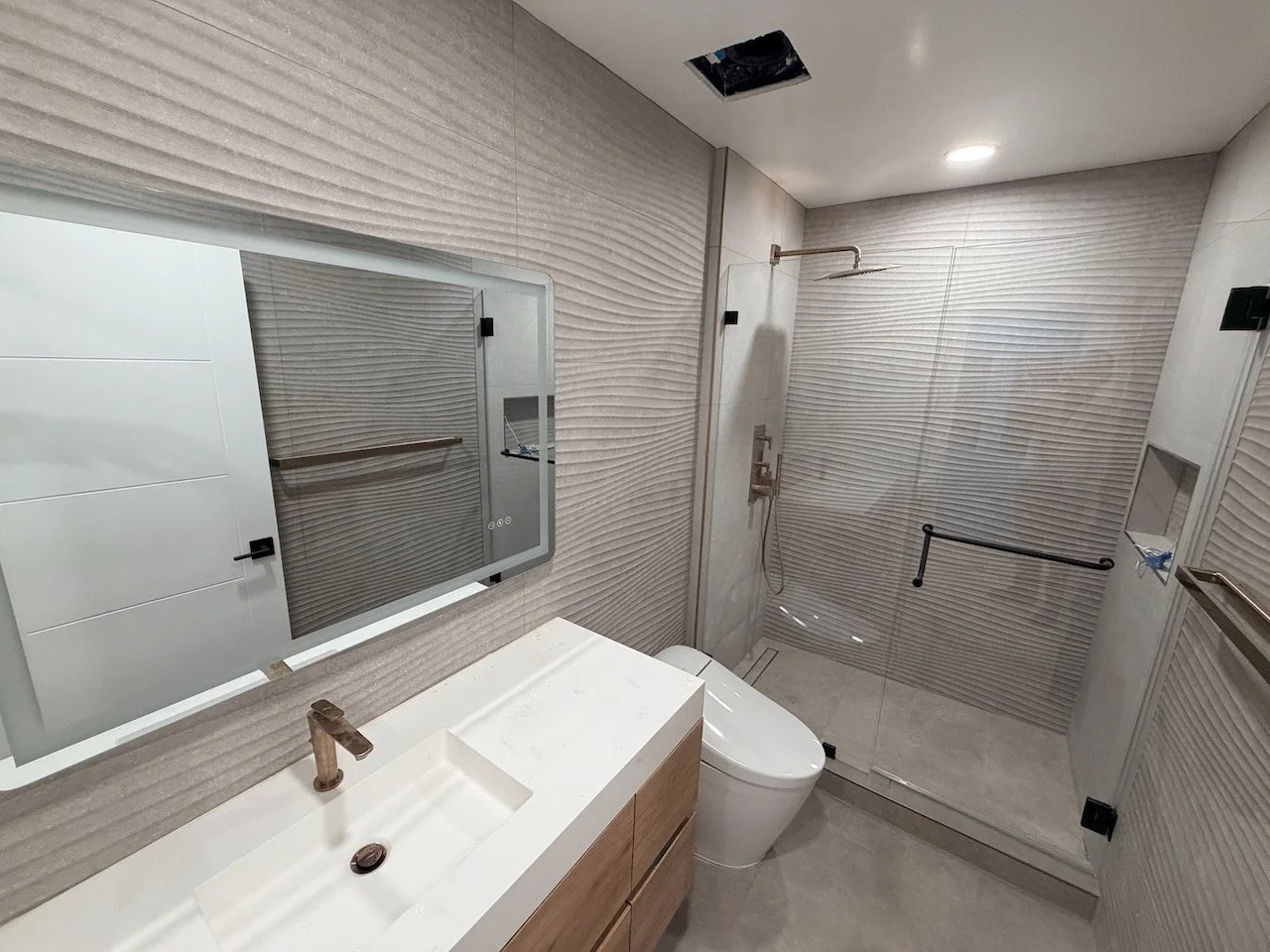
Bigger Tiles, Fewer Edge Options
One of the biggest shifts in recent years is tile size.
12"x12" and 4"x4" tiles used to be common
Now we regularly see 24"x48", 48"x48", and even slab-style tiles
This change directly affects how edges are handled.
Why this matters:
Bullnose pieces are no longer widely produced
Large-format tiles are difficult and expensive to fabricate into matching edge pieces.Manufacturers focus on field tile only
Most tile lines today are sold without edge accessories.Fewer material-compatible edge solutions
The bigger and denser the tile, the harder it is to finish edges cleanly on site.
The Decline of Bullnose and Mitered Edges
Bullnose: Becoming Rare
Bullnose used to be the standard solution:
Factory-finished
Durable
Clean edge termination
Today:
Many tile collections don’t offer bullnose at all
When available, options are limited and inconsistent
Often don’t match newer large-format designs
Mitered Edges: Less Practical with Modern Tile
Mitering works best when:
Tiles are smaller
Materials are softer or full-body
With today’s tiles:
Large-format porcelain is harder and more brittle at edges
Cutting precise 45° edges becomes more difficult and labor-intensive
Corners become thin and vulnerable to chipping
So while mitering is still possible, it’s less compatible with modern tile products.
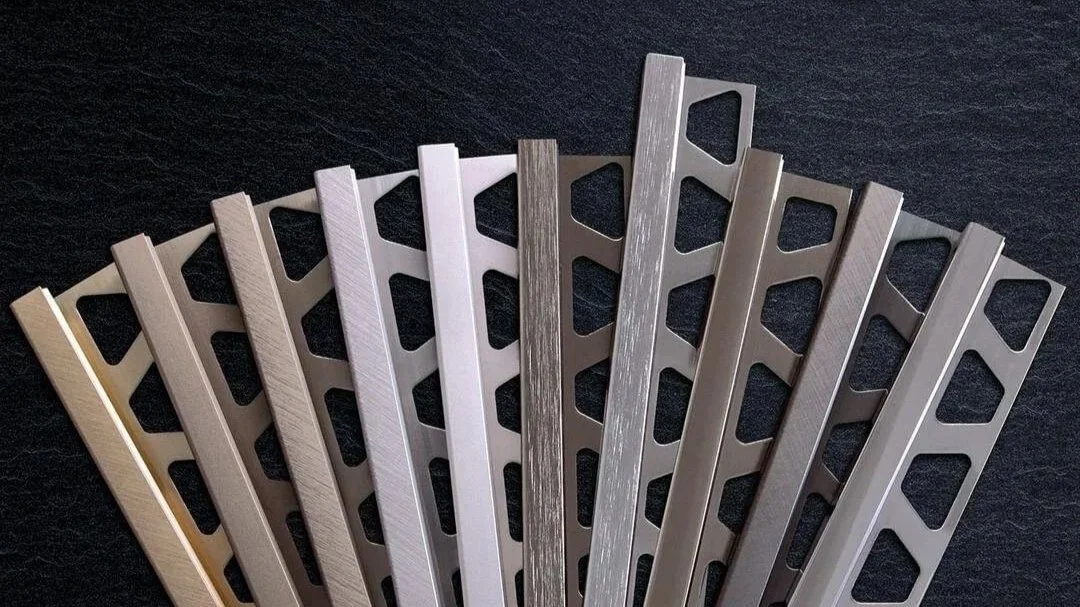
Why Metal Trim Is Now the Right Solution
Because of these industry shifts, metal edge trim has become the standard.
Systems like Schluter Systems are now designed to work with modern tile formats.
Key advantages:
Designed for large-format tile
Protects fragile edges
Consistent, straight finish
Available in modern finishes that match fixtures
This is not a workaround—it’s what the industry is built around today.
Our Recommendation at ENE Smarthome
We generally guide clients toward metal trim because:
Tile products today expect it
Alternative options are limited or unreliable
It delivers the best balance of durability and clean design
We understand the appeal of seamless edges—but in most real-world applications, metal trim provides a better long-term result.
Final Thoughts
The key takeaway is simple:
Tiles are getting larger
Edge accessories like bullnose are becoming rare
Mitered edges are becoming less practical
As a result, metal trim is no longer optional—it’s the modern standard.
If you’re selecting tile for your project, we’ll help you choose edge details that align with today’s materials—and ensure your space looks clean, intentional, and built to last.