The Classic Kitchen Work Triangle in Modern Remodels
When homeowners think about remodeling a kitchen, the focus is often on finishes, appliances, and cabinetry. But before any of those details come into play, there’s one foundational principle that has shaped good kitchen design for decades: the work triangle.
What Is the Kitchen Work Triangle?
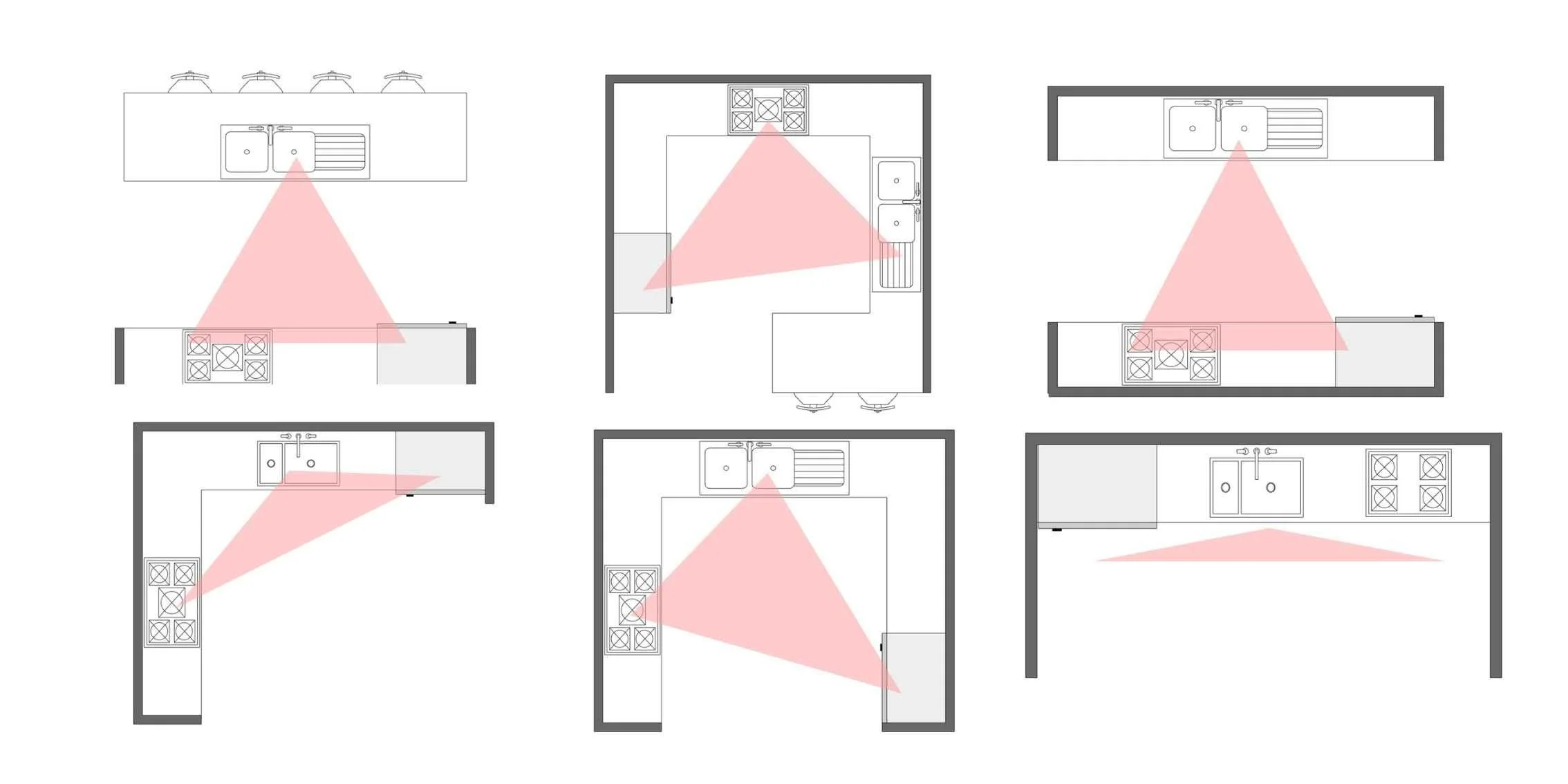
The kitchen work triangle connects the sink, stove, and refrigerator — the three primary work points. A well-designed triangle reduces unnecessary movement, improves safety, and makes cooking feel natural.
Key characteristics of an effective triangle:
Each leg typically ranges from 4 to 9 feet
No heavy traffic should cross through it
Each point needs sufficient landing and prep space
This simple guideline has influenced efficient kitchen planning for decades.
Why It Gets Overlooked — and Why It Shouldn’t
Modern remodels — especially in the Bay Area — often inherit constraints from the existing home:
Plumbing trapped in old wall locations
Outdated electrical routes or limited circuits
Venting paths that are difficult to relocate
Structural walls that limit appliance placement
Budget pressure to “keep everything where it is”
These limitations make it tempting to ignore the triangle and just refresh finishes.
But here’s the important truth:
You remodel a kitchen maybe once every 20–30 years.
If the layout doesn’t work, no amount of quartz or high-end appliances will fix everyday frustration.
Sometimes the smartest long-term investment is:
Moving a drain or supply line
Upgrading electrical to support a better appliance layout
Adjusting ducting
Opening a wall to create better flow
These decisions can dramatically improve how the kitchen performs for decades.
Plan the Layout First — Everything Else Comes After
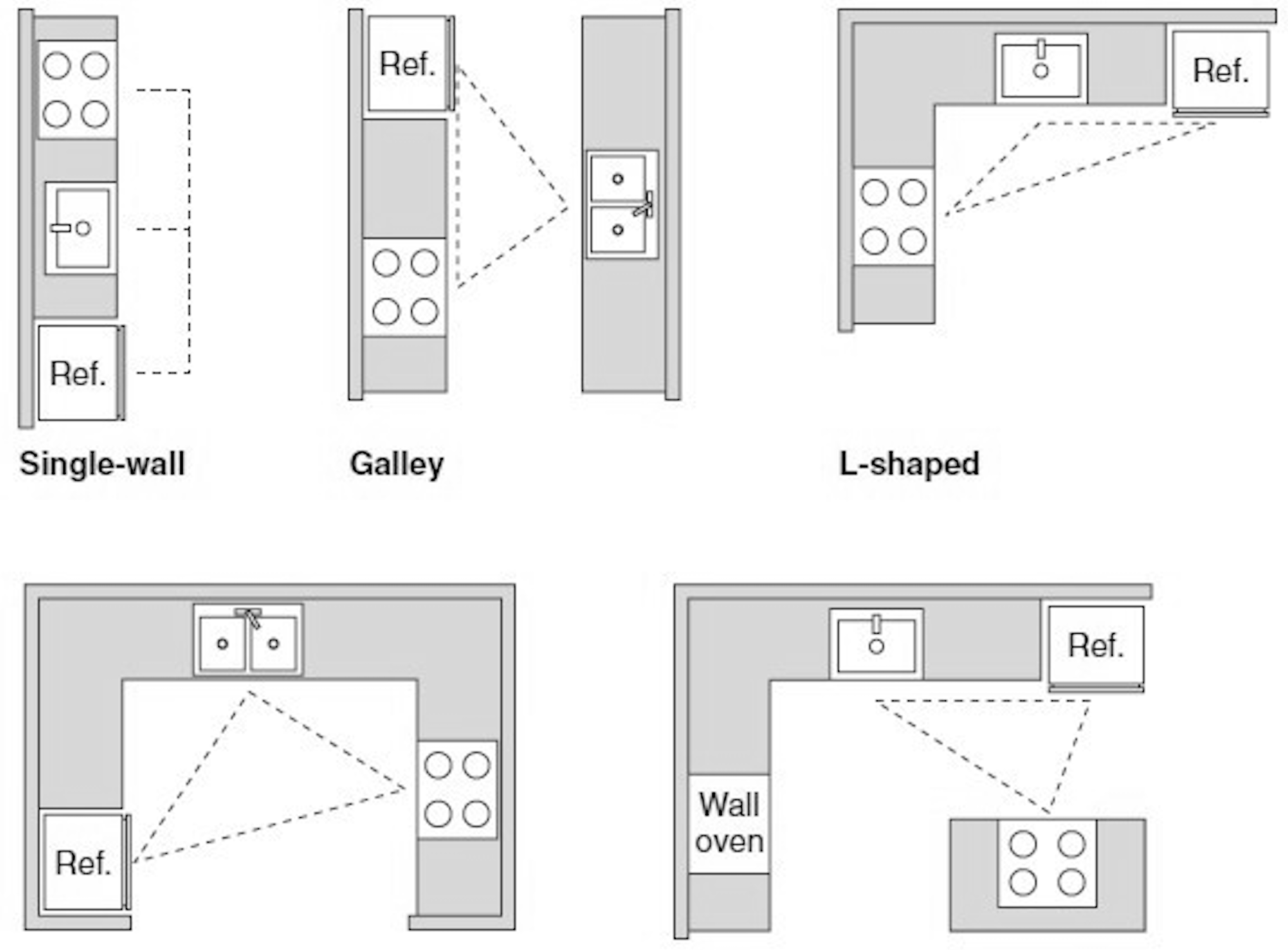
Before choosing cabinets, tile, or fixtures, start with the layout.
A kitchen designed around a strong work triangle feels intuitive, comfortable, and efficient — whether a single cook uses it or the whole family is moving through the space.
If you're considering a remodel, we can help evaluate your current layout, identify bottlenecks, and propose triangle-based configurations that make the space work better for everyday life.